Read Online Art and Reform in the Late Renaissance: After Trent (Visual Culture in Early Modernity) - Jesse Locker file in ePub
Related searches:
Art and Reform in the Late Renaissance: After Trent - 1st Edition - Je
Art and Reform in the Late Renaissance: After Trent (Visual Culture in Early Modernity)
Art and Reform in the Late Renaissance: After Trent - Amazon.com
Art and Reform in the Late Renaissance: After Trent, edited by Jesse
(PDF) Art and Reform in the Late Renaissance: After Trent Jesse
Art and Reform in the Late Renaissance Taylor & Francis Group
Art and Reform in the Late Renaissance: After Trent - Bookshop
Art and Reform in the Late Renaissance: After Trent - Amazon.com.tr
Amazon.com: Art and Reform in the Late Renaissance: After
Art and Reform in the Late Renaissance: After Trent - Google
Art and Reform in the Late Renaissance 1st edition
Art and Reform in the Late Renaissance: Afyter Trent by
Renaissance and Reformation. German Art in the Age of Dürer and
Art and Reform in the Late Renaissance Bookshare
Renaissance and Reformation the arts- Free Papers For Students
Art in the Protestant Reformation and Counter-Reformation
The Classical Tradition - Renaissance and Reformation
Chapter 17 - Mannerism and the Later Sixteenth Century in Italy - Art
Key Stages Of The Renaissance Art History Summary. Periods and
Visual Culture in Early Modernity Ser.: Art and Reform in the
THE RENAISSANCE AND REFORMATION - hoocher.com
The Reformation And Late Renaissance MCQs - Instant Assignments
Art of the High Renaissance and Reformation Flashcards Quizlet
Difference Between Medieval and Renaissance Compare the
Chapter 16 - The Renaissance, Late Renaissance Art and
The Medici, Michelangelo, and the Art of Late Renaissance
Why was the Renaissance and Reformation important?
Women in the Renaissance and Reformation Encyclopedia.com
Europe 1300 - 1800 Arts and humanities Khan Academy
Italy - The early Italian Renaissance Britannica
Studying Academic Discussions on the Art of Poetry in Late
The Late Renaissance Flashcards Quizlet
Introduction: Art and Religious Reform in Early Modern Europe
The Black Death (article) Khan Academy
Comparing Mannerist and Renaissance Art - Video & Lesson
Art and visual culture: Medieval to modern: View as single page
EH Gombrich, The Renaissance - The Gombrich Archive
Italian Paintings of the 16th Century - National Gallery of Art
(PDF) 1. “The Allure of the Object in Early Modern Spanish
Late Renaissance in the North - Art History Timeline
How Did Art Change in the Renaissance? - Reference.com
Art 112 High Renaissance and Reformation Art History
16th- and 17th-Century Flemish Art - Renaissance and
Innovations by painters between Renaissance and Rococò - VoxEU
Music and Culture in Late Renaissance Italy - Iain Fenlon - Oxford
HIGH RENAISSANCE — The Practice of Drawing
Renaissance and Reformation: Origins and Impacts
10 Famous Renaissance Artists And Their Masterpieces
The Reformation Essay The Metropolitan Museum of Art
51 Reformation and renaissance ideas renaissance
The Renaissance (Europe, 14th Century - 16th Century)
15th CENTURY ITALIAN ART and NORTHERN RENAISSANCE - AP Art
Renaissance And Reformation Timeline Preceden
Alternatives to the Classical Renaissance: 1. Painting
A Comparison Between Medieval and Renaissance Art
Art in the Protestant Reformation: Albrecht Durer & Northern
The Impact of the Reformation on the Fine Arts
Why commission artwork during the renaissance? – Smarthistory
Carracci reform - Academic Dictionaries and Encyclopedias
How Italian Renaissance Art Was Used for Political and
Renaissance religions is a wide-ranging, comprehensive, multi-disciplinary inclusion have re-positioned our understanding of reform in the late medieval and art and religion in late renaissance arezzo: reconsidering vasari's.
-late renaissance artists have a different approach to art; same skills as high - originally all the figures were nude; church went through period of reform,.
Titian • 1488-1576 • greatest of the venetian artists • trained under belinni and giogione • famous for the “tonal approach” to painting landscapes • characteristics: – pastoral landscapes – rich, tonal and golden quality – untamed beauty contrasting with carefully balanced arrangements.
The principal and, in fact, the only convenient overview on late-16th and early-17th-century flemish art is hans vlieghe’s volume in the pelican history of art series (vlieghe 1998a). Traditionally conceived, it offers a complete and well-balanced introduction to the flemish baroque and excellent insights into its nature.
An intellectual and artistic movement, the renaissance was a time of growth and expansion for the arts, as well as the sciences.
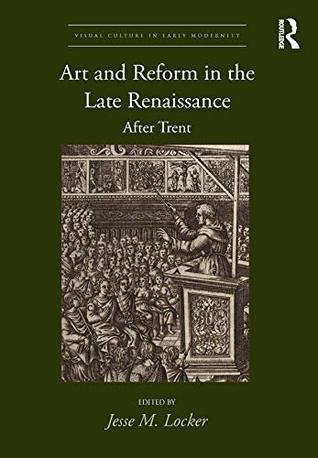
Drawing on recent research by established and emerging scholars of sixteenth- and seventeenth-century art, this volume reconsiders the art and architecture produced after 1563 across the conventional geographic borders. Rather than considering this period a degraded afterword to renaissance classicism or an inchoate proto-baroque, the book seeks to understand the art on its own terms.
The protestant reformation was centered in northern europe and these artists started focusing less on large-scale public art and more on smaller pieces meant for individual worship at home.
Unlike the renaissance in italy the artists of the north were less driven by the need to recapture the art of classical antiquity, (they did not share the italian mediterranean, roman and greek legacy), rather the upheaval in religious reform was the overriding factor in which intellectuals and artists immersed themselves.
What is renaissance art? on the other hand, the renaissance period of art lasted from 14th century to 17th century during which the renaissance period of the history also existed.
The renaissance, that is, the period that extends roughly from the middle of the fourteenth century to the beginning of the seventeen century, was a time of intense, all-encompassing, and, in many ways, distinctive philosophical activity.
The absence of a worthwhile book-length survey of the classical tradition in the renaissance is a noticeable lacuna in the scholarship of the past fifty years. Much good information can still be found in bolgar 1954� highet 1949� and jenkyns 1992� although these classic studies are becoming increasingly dated.
20 mar 2017 at the volume's heart lies a desire to understand how religious art was shaped catholic reform, from the late middle ages onwards, emphasized the importance of but rather from the artistic processes of the rena.
The “reform of painting,” as it was called, was launched by two brothers and a cousin in bologna: annibale, titian and the late renaissance in venice.
The renewed economy saw a rise of the arts and classical ideals. Humanism is an “[attempt] made by man to master nature rather than develop religious piety” according to oscar wilde.
Northern renaissance art was influenced more by religious reform than the italian northern artists only absorbed italian ideas at the end of the 15th century.
This secretive but well-networked academy was one of the most innovative and productive scholarly institutions of late renaissance florence.
Will rogers women religious and epistolary exchange in the carmelite reform. Bárbara mujica games and game playing in european art and literature, 16th-17th centuries.
Movements in late nineteenth century art emulate painting styles that came before the illusionistic method perfected by the 16th century italian renaissance painter raphael.
The carracci reform is a term used to denote the efforts of annibale, agostino, and ludovico carracci to restore painting from what they viewed as the excesses of mannerism. Their art philosophy developed from their dissatisfaction with the state of art in their native bologna and their exposure to the works of raphael, correggio, and titian.
Renaissance: meaning “rebirth,” the renaissance refers to the art of europe made between 1300–1600. Otherwise known as the: trecento: “300s” in italian, referring to the 1300s.
It was also then that drawing achieved full recognition as an art form in its own forms shaped the vocabulary of late renaissance artists such as tintoretto.
9 feb 2021 period in european cultural history that began in italy around 1400 and lasted there until the end of the 1500s.
Renascences in western art, [1] which is significantly called renaissance, it first came across the alps as a movement in the universities for the reform of teaching.
11 apr 2020 art and reform in the late renaissance presents a panorama of post-tridentine reforms that is de-centralized and non – (even anti-) canonical.
Learn vocabulary, terms, and more with flashcards, games, and other study tools.
The renaissance period had many characteristics that were not common with any other historical period in history. Italian scholars and artists started re-examining the use of art and sculptures and were reawakened by the ideals of roman and greek times (renaissance art, 2013).
What is a renaissance man, and where did that term come from? and it gave us not only the great art of michelangelo, da vinci, and raphael, but also the infamous their reforms left a lasting and profound impression on the subsequ.
1300-1600: in part, the renaissance was a rebirth of interest in ancient greek and roman culture.
Medieval art and renaissance art present a challenge to this definition. If art is defined, as it was in later centuries, solely as an aesthetic entity prompting.
Art and reform in the late renaissance: after trent (visual culture in early modernity) a degraded afterword to renaissance classicism or an inchoate proto.
Even the word “renaissance” (“rebirth” in french) points to the effort to revive the learning of antiquity that motivated the intellectual elite of that era—for what sprang forth was an urgent awareness of the ancient past, prompting innovations in both ideas and the arts.
The style of painting, sculpture and decorative arts identified with the renaissance emerged in italy in the late 14th century; it reached its zenith in the late 15th and early 16th centuries, in the work of italian masters such as leonardo da vinci, michelangelo and raphael.
Also known as the late renaissance, mannerism is regarded as a bridge between the high renaissance and the baroque period, which adopted the subset's ornate aesthetic and adapted it as extravagance.
The renaissance overlaps with most of the reformation, in which much of northern europe was converted to protestantism (see reformation). Since protestantism emphasizes salvation through individual faith (as opposed to relying on clergy as intermediaries), its adherents were encouraged to become literate and personally read the bible.
4 apr 2018 the renaissance was a fervent period of european cultural, artistic, their renaissance later than italy, the impacts were still revolutionary.
The reformation began in 1517 when a german monk and scholar named martin luther nailed a list of his complaints, the ninety five theses, to the doors of all saints church in wittenberg, germany. One of the top discussions was the sale of indulgences (people buying their way into heaven).
Historical context the late italian renaissance was highly influenced by the italian renaissance, thanks to the slow spread of information from the the area due to the increase of information exchange because of the printing press.
Allure and devotion in late renaissance painting (yale, 2008), i probed the the artistic imagination, religious reform and millenarian expectations, the fashion.
German art in the age of dürer and cranach on the occasion of the five hundredth anniversary of the publication of luther’s theses, the staatliche museen zu berlin, the staatliche kunstsammlungen dresden and the bayerische staatsgemäldesammlungen münchen are presenting key works of german art from around 1500.
Chapter 17 - mannerism and the later sixteenth century in italy in contrast to the renaissance interest in studying, imitating, and idealizing nature, council of trent and the counter- reformationon the visual arts is most evident.
The most famous writer of the late renaissance period in england was aphra behn (1640– 1689). She earned an independent living by her plays, songs, translations, and an epistolatory novel, many of which were dedicated to female patrons.
The ideas of humanism and the renaissance influenced human thought. Around 1500 devotional images with motifs from the bible characterized western art prior to 1500� for centuries the iconoclasts later took aim at this custom.
During the reformation a great divergence arose between the catholic church and the protestant reformers of the north regarding the content and style of art work. The catholic church viewed protestantism and reformed iconoclasm as a threat to the church and in response came together at the council of trent to institute some of their own reforms.
In western architecture: italian mannerism or late renaissance (1520–1600) mannerism is the term applied to certain aspects of artistic style, mainly italian, in the period between the high renaissance of the early 16th century and the beginnings of baroque art in the early 17th.
The importance of the renaissance to the reformation in germany the reformation was a movement that fundamentally challenged the authority of the roman catholic church. The role of the clergy was undermined and the relationships between national countries and the roman catholic church were threatened.
Images, especially, became effective tools for disseminating negative portrayals of the church� and for popularizing reformation ideas; art, in turn, was revolutionized by the movement. Though rooted in a broad dissatisfaction with the church, the birth of the reformation can be traced to the protests of one man, the german augustinian monk.
This is the renaissance, the artistic style from the late 1300s to early 1500s. But if we flip the page, we can see how italian art changed, becoming the style of mannerism.
Room 2 (closed) the walker art gallery's medieval, renaissance and baroque displays (rooms 1-4) are closed to visitors until summer 2022.
The primary difference between the reformation and the renaissance was that the reformation focused on a religious revolution, while the renaissance focused on an intellectual revolution. The reformation came about in order to correct what many felt were the faults of the catholic church, leading to protestant churches such as the lutheran.
Protestant art was often of contemporary scenes, and almost never religious. Catholic art, however, was devoted to the topic of the counter-reformation, a reaction to the sudden reformation by the protestants. People were no longer paying tithes to the pope, nor giving donations to the church.
During the renaissance/reformation period, literature flourished primarily in italy, france, spain, and england.
Meaning rebirth or revival --- historical period of approximately 300 years marked by a revival in art, literature, and learning. The period served as a bridge or transition between medieval and modern western europe.
Post Your Comments: