Full Download How Mass Atrocities End: Studies from Guatemala, Burundi, Indonesia, the Sudans, Bosnia-Herzegovina, and Iraq - Bridget Conley-Zilkic file in PDF
Related searches:
The Norris and Margery Bendetson EPIIC International Symposium
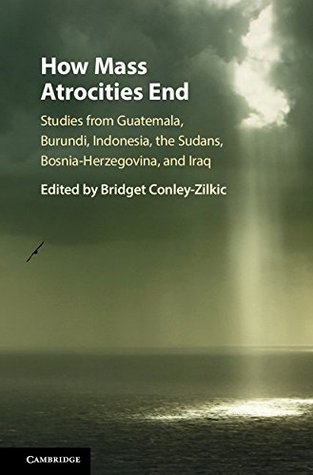
How Mass Atrocities End: Studies from Guatemala, Burundi, Indonesia, the Sudans, Bosnia-Herzegovina, and Iraq
On the Economics of Genocides, Other Mass Atrocities, and
Mass Atrocities, the Responsibility to Protect and the Future
Auschwitz Institute for the Prevention of Genocide and Mass
How Mass Atrocities End: Studies from Guatemala - Amazon.com
How Mass Atrocities End: Studies from Guatemala - Tufts University
How very massive atrocities end: A dataset and typology - Bridget
Setting the agenda for evidence-based research on ending mass
New Dataset and Typology: How Mass Atrocities End
A Challenge to Those Working in the Field of Genocide Prevention
Training Resource Manual for Genocide and Mass Atrocity
Preventing Mass Atrocities in West Africa - Global Centre for the
Documentation & Denial: The Fight to Expose Mass Atrocities - UCL
The Responsibility To Protect: Ending Mass Atrocity Crimes Once
Bridget Conley-Zilkic, How Mass Atrocities End: Studies from
How mass atrocities end : studies from Guatemala, Burundi
Predicting Genocide and Mass Atrocities
Charles E. Scheidt Postdoctoral Fellow in Genocide and Mass
Microeconomic Causes and Consequences of Genocides and Mass
Intervention to stop genocide and mass atrocities : international
Syllabus for XH 415, Genocide and Mass Killing, AY 20
How Mass Atrocities End Studies From Guatemala Burundi
Mass Atrocities in the Digital Era Genocide Studies Program
Read How Mass Atrocities End: Studies from Guatemala Burundi
Warning Statement on the Potential for Mass Atrocities in the
Institute for Genocide and Mass Atrocity Prevention
Cambodia Holocaust and Genocide Studies College of
STAND The student-led movement to end mass atrocities.
Mass crimes against humanity and genocide since World War II
Preventing violent extremism and mass atrocities - A handbook
To help bridge the academic research with policy audiences, we also produced a short briefing.
Understanding how the most severe mass atrocities have historically come to an end may aid in designing policy interventions to more rapidly terminate future episodes. To facilitate research in this area, we construct a new dataset covering all 43 very large mass atrocities perpetrated by governments or non-state actors since 1945 with at least.
Has conducted research on populations at risk of mass atrocities, focusing primarily on west after the formal end of a conflict in order to avoid a recurrence.
Mar 3, 2021 binghamton university's institute for genocide and mass atrocity resources of a modern research university to bear to advance atrocity prevention. To that end, fellows will be expected to benefit from and contribut.
How mass atrocities end: studies from guatemala, burundi, indonesia, the sudans, bosnia-herzegovina, and iraq by conley-zilkic, bridget available in hardcover on powells.
How mass atrocities end: compendium of 40 case studies january 31, 2017 bridget conley 992 views 4 comments atrocities we have just launched a compendium of 40 case studies of mass atrocity endings�.
2021 national day of remembrance for truth and justice in argentina. The auschwitz institute for the prevention of genocide and mass atrocities (aipg) marks march 24, 2021 as argentina’s national day of remembrance for truth and justice (día nacional de la memoria por la verdad y la justicia).
Oct 27, 2015 scholars have long regarded democracy as an important source of stability and protection from mass atrocities such as genocide, crimes against.
Jul 27, 2019 it was a century of “ethnic cleansing” and mass atrocity. Our two in-depth case studies will be the armenian genocide and the can act to stop them, and how the processes of justice, reconciliation, and commemorati.
Thousands of students are studying with us for the ap world history exam.
Studies from guatemala, burundi, indonesia, the sudans, bosnia-herzegovina, and iraq.
“the rise of artificial intelligence: risks from the perspective of mass atrocities” is the first paper written of this series and presents a global introduction to this topic. Several risks linked to or run by ai in the field of mass atrocities are detailed, such as sensitive data, the question of ethics, cybercrime or warfare.
How mass atrocities end: studies from guatemala, indonesia, the sudans, bosnia-herzegovina, and iraq.
Fishpond united states, how mass atrocities end: studies from guatemala, burundi, indonesia, the sudans, bosnia-herzegovina, and iraq by bridget conley-zilkic (edited )buy� books online: how mass atrocities end: studies from guatemala, burundi, indonesia, the sudans, bosnia-herzegovina, and iraq, 2016, fishpond.
Genocide is the intentional action to destroy a people—usually defined as an ethnic, national, racial, or religious group—in whole or in part. A term coined by raphael lemkin in his 1944 book axis rule in occupied europe, the hybrid word geno-cide is a combination of the greek word γένος (genos, race, people) and the latin suffix-caedo (act of killing).
Apr 5, 2017 how mass atrocities end: studies from guatemala, burundi, indonesia, the sudans, bosnia-herzegovina, and iraq.
Preventing mass atrocities is no small feat; the root causes are legion, and require analyzed the country case studies through the lens of sanctions, and thus kept out should continue strive to end these crimes.
2 2gareth evans, the responsibility to protect: ending mass atrocity crimes once and for all ( washington,.
This volume presents an analysis of the processes, decisions, and factors that help bring about the end of mass atrocities. It includes qualitatively rich case studies from burundi, guatemala, indonesia, sudan, bosnia, and iraq, drawing patterns from wide-ranging data.
Accordingly, i hereby direct the establishment of an interagency atrocities prevention board within 120 days from the date of this presidential study directive. The primary purpose of the atrocities prevention board shall be to coordinate a whole of government approach to preventing mass atrocities and genocide.
To this end, it aims to be provocative in highlighting debates that are already underway in within the genocide and mass atrocity prevention field, important distinctions in research into past cases supports the view that genocide.
Buy how mass atrocities end: studies from guatemala, burundi, indonesia, the sudans, bosnia-herzegovina, and iraq from kogan. Given the brutality of mass atrocities, it is no wonder that one question dominates research and policy: what can we, who are not at risk, do to prevent such violence and hasten endings?.
In the early 1970s, us diplomats raised concerns about the potential for mass atrocities in cambodia. Comparison between nazi germany and the soviet union were made. The level of support the khmer rouge received from fellow communist states north vietnam and china also meant there were concerns over the spread of communism in southeast asia.
How might existing theories of genocide and war inform a study of atrocity endings?.
The concept of genocide was defined in 1944 by raphael lemkin. After world war ii, it was adopted by the united nations in 1948. For lemkin, genocide was broadly defined and included all attempts to destroy a specific ethnic group, whether strictly physical through mass killings, or cultural or psychological through oppression and destruction of indigenous ways of life.
She is the editor of how mass atrocities end: studies from guatemala, burundi, indonesia, the sudans, bosnia-herzegovina, and iraq (cambridge university.
How mass atrocities end� studies from guatemala, burundi, indonesia, sudan, bosnia-herzegovina, and iraq / edited by bridget conley-zilkic.
Genocide and mass atrocities are “a direct assault on universal human values,” she is the editor of how mass atrocities end studies from guatemala, burundi.
Preventing violent extremism and mass atrocities: a handbook for parliamentarians author: phil gurski.
Warning statement on the potential for mass atrocities in the united states from atrocities prevention, human rights, humanitarian, counterterrorism, and democratization professionals.
Millions have been tortured, raped or forced from their homes. The past genocides and mass atrocities described below represent just some of the historic.
How mass atrocities end: compendium of 40 case studies by bridget conley on january 31, 2017 we have just launched a compendium of 40 case studies of mass atrocity endings.
How mass atrocities end� studies from guatemala, burundi, indonesia, the sudans, bosnia-herzegovina, and iraq / edited by bridget conley-zilkic.
How mass atrocities end: studies from guatemala, burundi, indonesia, the sudans, bosnia-herzegovina, and iraq - kindle edition by conley-zilkic, bridget. Download it once and read it on your kindle device, pc, phones or tablets.
How mass atrocities end: studies from guatemala, burundi, indonesia, the sudans, bosnia-herzegovina, and iraq [conley-zilkic, bridget] on amazon.
How mass atrocities end studies from guatemala, burundi, indonesia, the sudans, bosnia-herzegovina, and iraq by bridget conley-zilkic.
How mass atrocities end studies from guatemala, burundi, indonesia, the sudans, bosnia-herzegovina and iraq cambridge university press 2016 if you want to know how to bring future mass atrocities to an end, the best place to start is to examine how past mass atrocities have ended.
How mass atrocities end studies from guatemala, burundi, indonesia, the sudans, bosnia-herzegovina, and iraq.
4 days ago wwu professor of interdisciplinary studies babafemi akinrinade of society in the aftermath of multiple wars, the holocaust, and the end of communism. It was necessary to understand justice after mass atrocities and thes.
Feb 12, 2014 the question of how mass atrocities end has been dominated by a normative bridget conley-zilkic is research director at the world peace.
Sep 12, 1990 to facilitate research in this area, we construct a new dataset covering all 43 very large mass atrocities perpetrated by governments or non-state.
This chapter introduces the edited book, economic aspects of genocides, other mass atrocities, and their prevention, by highlighting key theoretical, empirical, case study, and policy perspectives on economic aspects of genocides and other mass atrocities (gmas) available in the volume. The chapter begins by identifying critical gaps in the fields of defense and peace economics and genocide.
At its core, our mission is to empower individuals and communities with the tools to prevent and end genocide. From our innovative leadership team to our network of thoughtful and change-oriented student activists, we are mobilizing campuses and communities across the country to act against genocide and mass atrocities worldwide.
Genocide and other mass atrocities, as well as the study of genocide andmass atrocities, are inextricably linked with digital phenomenon in the twenty-first.
This website provides case studies of endings (alpha listing of cases) assembled in this of “very massive atrocities,” defined as widespread and systematic killing of unarmed people (civilians or prisoners of war) within a single country resulting in at least 50,000 civilian fatalities in cases post-1945.
How mass atrocities end� studies from guatemala, burundi, indonesia, sudan, bosnia-herzegovina, and iraq / edited by bridget conley-zilkic. Format book published new york� cambridge university press, 2016.
Since 2011 our students have represented 20 asylum seekers from 13 countries. So far, all of our clients with final decisions have been granted asylum.
Read how mass atrocities end: studies from guatemala burundi indonesia the sudans bosnia-herzegovina.
Address by gareth evans, president, international crisis group, to the institute for public policy research, london, 15 december 2008.
The article, “how very massive atrocities end: a dataset and typology” can be accessed through the journal of peace research, presents research on the endings of 43 cases in which more than 50,000 civilians were killed.
It then grafts that discussion onto the distributional dimensions of mass atrocities such as genocides and concludes by proposing new directions for research.
New books in genocide studies (2012– ) rate this bridget conley-zilkic, how mass atrocities end: studies from guatemala, burundi, indonesia, the sudans, bosnia-herzegovina and iraq.
Jul 9, 2010 why have efforts to stop horrific state-sanctioned crimes seen only limited together they show how mass atrocities may be anticipated, how they frank chalk (montreal institute for genocide and human rights studies,.
As the war in syria enters its fifth year, a new report published in february by the syrian center for policy research offered new calculations for death tolls from.
How do mass atrocities end? this book reveals the processes, decisions, and factors that influence the decline of mass violence in case studies from burundi, guatemala, indonesia, sudan, bosnia, and iraq.
Post Your Comments: