Download Fresh Kills: A History of Consuming and Discarding in New York City - Martin V Melosi file in PDF
Related searches:
Fresh Kills: A History of Consuming and Discarding in - Amazon.com
Fresh Kills: A History of Consuming and Discarding in New York City
Fresh Kills: A History of Consuming and Discarding in New - JSTOR
Fresh Kills: A History of Consuming and - Barnes & Noble
Fresh Kills – A History of Consuming and Discarding in New York
Fresh Kills : A History of Consuming and Discarding in New
Fresh Kills: A History of Consuming and Discarding - New York
[PDF] [EPUB] Fresh Kills: A History of Consuming and
Wild NYC: Building Biodiversity in Fresh Kills and City Parks - CUNY
Fresh Kills, Staten Island Then and Now - YouTube
The History of Raw Milk and Pasteurization – Food (Policy
Uses of Silver: Relearning History and The Health Support
ATTACHMENT X FRESH KILLS CLOSURE CONSTRUCTION AND END USE
Oregano: Health benefits, uses, and side effects
kill Origin and meaning of kill by Online Etymology Dictionary
Early Research and Treatment of Tuberculosis in the 19th
20 of the Best Antiviral and Antibacterial Herbs and Plants Ever!
Water, Sanitation and Hygiene (WASH) Press centre UNICEF
Meat and the Environment PETA
The city of new york established the fresh kills landfill in 1948, and respond to the natural and constructed history of the site.
Whatever method of salt preservation was used, the first thing a cook did when he got ready to prepare the salted food for consumption was soaking it in fresh water to remove as much of the salt as possible. Some cooks were more conscientious than others when it came to this step, which could take several trips to the well for fresh water.
Fresh kills (kill comes from a dutch word for waterway), by the time it was finally closed in 2001, was new york city’s last functioning landfill.
But the landfill's history is long, and there is still plenty of anger, skepticism, and mistrust. Swallows (and occasionally wrens) eat insects that have an aquatic.
Fresh kills: a history of consuming and discarding in new york city.
Nov 17, 2012 new york - amid the clanging of dump trucks, a crane with a clamshell scoop hoisted a pile of debris as big as a minivan and dropped it onto.
Apr 15, 2013 incorporate distinctive aspects of fresh kills and its historical use as a landfill, wetlands ecology and its future as a park and ecological.
The american lung association is dedicated to the cure and control of all lung diseases, but its formation in 1904 was in response to only one: tuberculosis. During the nineteenth and early twentieth centuries, tuberculosis (tb) was the leading cause of death in the united states, and one of the most feared diseases in the world.
Discover fresh kills landfill in staten island, new york: one-time largest man-made structure in the world will be a park in 30 years.
After a tangled bureaucratic history, however, fresh kills’ 2,200-acre site is now moving toward its reincarnation as a public park almost three times the size of manhattan’s central park.
– it still has basically the same nutritional content as raw milk. Pro raw: – pasteurization kills protective enzymes that prevent spoilage and help humans digest milk.
Melosi’s new book fresh kills: a history of consuming and discarding in new york city (columbia university press, 2020) tells the story of fresh kills ― a monumental 2,200-acre site on staten island ― that was once the world’s largest landfill. From 1948 to 2001, it was the main receptacle for new york city ’s refuse.
View listing photos, review sales history, and use our detailed real estate filters to find the perfect place.
Fresh kills was one of many new york city landfills when it opened on april 19, 1948. There was also a network of incinerators in the city, but every landfill and incinerator was closed over time, so that by the early 1990s, fresh kills was the only option left.
On march 22, 2001, after 53 years of operation, the fresh kills landfill received its final load of garbage.
By 1955, fresh kills was the largest landfill in the world, serving as the principal landfill for household garbage collected in new york city. At its peak of operation in 1986-87, fresh kills received as much as 29,000 tons of trash per day and employed 680 people.
A teenager who went white-water rafting in north carolina contracted a rare, brain-eating amoeba and died.
Staten island's freshkills park was once the world's largest landfill, a dumping ground for new york city's abundant heaps of garbage.
During the victorian era, many people died of consumption (tuberculosis) and the society had a creepy fascination with death. Powers, she declared that the clearest, most beautiful complexions were seen on people in the earliest stages of consumption.
As a herb, supplement, or essential oil, it may offer many health benefits.
Filled under: fresh kills landfill, garbage, interviews, staten island development, staten island history will walsh: “we’re here for a reason and you don’t want to get killed doing it” will walsh at work.
The fresh kills landfill is an archaeological site of massive proportions and import, a midden of our time, of modern new york's time. Established by robert moses, the state official responsible for much of new york's modern landscape, and serving as final witness to the destruction of one of new york's greatest architectural symbols, fresh.
In about twenty years, sometime around 2037, staten island's freshkills park will be fully this silencing of the history of the region and of the realities of urban.
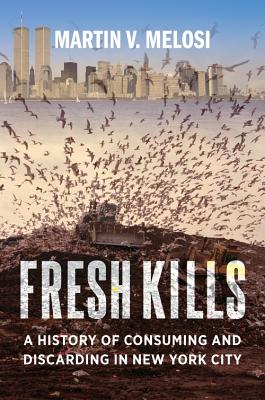
The first book on the history of the iconic landfill, fresh kills unites environmental, political, and cultural history to offer a reflection on material culture, consumer practices, and perceptions of value and worthlessness.
But the fresh kills of memory has remarkably little to do with its present. On a blue-skied and frigid valentine’s day, field, now a 33-year-old scientist, stands atop one of those gigantic.
The fresh kills landfill was a landfill covering 2,200 acres (890 ha) in the new york city borough of staten island in the united states. The name comes from the landfill's location along the banks of the fresh kills estuary in western staten island.
Note: do not consume oregon grape root if you have a history of stroke, diabetes, glaucoma, or high blood pressure. Clove is generally used as a topical analgesic, but clove essential oil or making your own clove-infused oil can be used to kill bacteria in the digestive system.
At 2,200 acres, freshkills park will be almost three times the size of central park and the largest park developed in new york city in over 100 years. Formerly the world’s largest landfill, this enormous park will one day hold a variety of public spaces and facilities, including playgrounds.
Fresh air for march 29, 2021: the amazing lives of migratory birds hear the fresh air program for march 29, 2021.
Ten years ago tuesday the last barge of garbage was delivered to fresh kills landfill on staten island. The closure of the dump — visible from space, taller than the statue of liberty and once.
As a means of survival, eating people is probably the best option. Pedro algorta, a man who was stranded in the andes mountains for 71 days after a plane crash in 1972, ate anything he could find to nourish his body for two months, including the hands, thigh, meat, and arms of people.
Fresh kills: a history of consuming and discarding in new york city centers on the mundane yet profound problem of solid waste disposal in the modern.
These fake 6 point star/star of saturn acts 7:43 jews are sataniccheck out the hexagram on saturn talked about in acts 7:43.
Fresh kills—a monumental 2,200-acre site on staten island—was once the world’s largest landfill. From 1948 to 2001, it was the main receptacle for new york city’s refuse.
Native to india, pepper has played a very important role throughout history and has been a prized spice since ancient times. Since ancient greece, pepper has held such high prestige that it was not only used as a seasoning but as a currency and a sacred offering. Pepper was used to both honor the gods and to pay taxes and ransoms.
The once notorious fresh kills landfill on staten island is being developed into an urban park.
May 5, 2020 fresh kills—a monumental 2,200-acre structure on staten island—was once the world's largest landfill.
This video features an hour-long presentation and discussion of plans to transform fresh kills landfill.
Another popular misconception is that eating six or seven bananas in a row could kill you via potassium poisoning. This simply isn’t true; scientists estimate a lethal dose would accumulate from ingesting over 400 a day – before which being sick would almost surely remove the offending article from your system.
Forty-four of a village's 45 inhabitants die; the last remaining resident, a woman in her 60s, goes insane.
Fresh kills—a monumental 2,200-acre site on staten island—was once the world's largest landfill.
Roadkill is edible and people have been living off it since horse coaches and cars have been killing wildlife in the hundreds of thousands. If you're squeamish about the idea of consuming roadkill, then it's not going.
This staten island advance report from march 2001 chronicles the history of the former fresh kills landfill, from its opening in the late 1940s until the day of its closure.
A brief history of the health support uses of silver for thousands of years, silver uses have included; being used as a healing and anti-bacterial agent by civilizations throughout the world. Its medical, preservative and restorative powers can be traced to the ancient greek and roman empires.
Tuesday night’s talk at the arsenal by marty bellew was a terrific history of landfills in new york city, culminating with the story of fresh kills. The context of other landfills really brought home the outsize scope of operations at fresh kills–no other site in the city even came close to the same acreage and garbage volume.
May 4, 2017 1948: fresh kills landfill opens the site of what became the world's largest landfill was once mostly tidal creeks and coastal marshland.
To understand how freshkills went from hated landfill to anticipated parkland, check these six points in its history. 1948: fresh kills landfill opens an aerial view of the landfill site from 1943.
Mar 22, 2021 a special ceremony took place monday, marking an important day in staten island history: march 22, 2001, the day the city closed the fresh.
Mar 28, 2019 this 2012 documentary from the staten island borough president's office and director andy levison show how the staten island area of fresh.
1991: fresh kills begins accepting all of the city’s garbage the landfill in the 1990s.
Produce many times more excrement than does the entire human population of the country. Factory farms produce about 500 million tons of manure each year.
Senatore, who died on january 19, 2011 from health complications associated with exposure to toxic air during 9/11 recovery efforts.
In this interview, he discusses issues of waste and recycling, periods of change in the department, and the closing of fresh kills landfill as well as its role in the clean-up after 9/11.
[the chicago defender, 1922] in remote villages the old custom still exists of placing a plate full of sliced onion beside the bed or coffin of any persons who had died of an infectious disease.
In the distance, a group of men are walking across the bridge.
In 2012, nyc parks hired twenty anglo-nubian goats for six weeks to restore a wetland within freshkills by eating their way through 2 acres of the invasive weed.
Fresh kills (from the middle dutch word kille, meaning riverbed or water channel) is a stream and freshwater estuary in the western portion of the new york city borough of staten island. It is the site of the fresh kills landfill, formerly new york city's principal landfill.
The first book on the history of the iconic landfill, fresh kills unites environmental, political, and cultural history to offer a reflection on material culture, consumer.
Fresh kills is a pre-covid healing place, where game cams spot the red fox at play on the edges of the rising woodlands or in the wildlife crossings that are codesigned by humans and the wildlife.
1-12) fresh kills: a history of consuming and discarding in new york city centers on the mundane yet profound problem of solid waste disposal in the modern metropolis. ¹ waste from mass consumption was a serious dilemma for cities in the twentieth century— and into the twenty-first.
The costs of attaining universal coverage for drinking water globally are estimated to be us$174 billion over the five-year period 2010-2015. The main contributor to overall benefits of drinking-water systems and services is the value of time savings which accounts for almost 70% of total benefits in all regions.
June-july: goats helped out in main creek wetland restoration by eating phragmites, an invasive reed. September 13: the museum of the city of new york opened an exhibit called “from farm to city: staten island 1661-2012” in which the development of fresh kills landfill into freshkills park is prominently featured.
Post Your Comments: