Read Online The History of Ireland: From the Treaty of Limerick to the Present Time; Being a Continuation of the History of the ABBE Macgeoghegan (Classic Reprint) - John Mitchel | PDF
Related searches:
History of the Republic of Ireland - Wikipedia
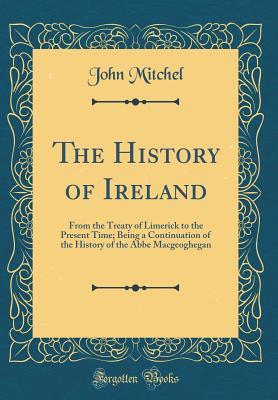
The History of Ireland: From the Treaty of Limerick to the Present Time; Being a Continuation of the History of the ABBE Macgeoghegan (Classic Reprint)
The Anglo-Irish Treaty (1921) History of Ireland - Your Irish Culture
A history of Ireland for outsiders: From Henry VIII to the Troubles
Ireland and the EU: A History - DFA
Mitchell: The History of Ireland - AskAboutIreland.ie
The History Of Ireland: From The Treaty Of Limerick To The
The History of Ireland, from the Treaty of Limerick to the
The history of Ireland, ancient and modern : taken from the
Imagining Ireland's Independence: The Debates Over the Anglo
The History of Ireland, from the Treaty of Limerick to the - bol.com
A Brief History of Ireland - Neolithic Era to the Troubles Wilderness
History of Parliament in Ireland – Houses of the Oireachtas
Imagining Ireland's Independence: The Debates over - Amazon.com
The Anglo-Irish Treaty of 1921 History Today
Irish history Find out about the history of Ireland
The Treaty - History of Ireland and Her People
The Anglo-Irish Treaty and its Consequences – History for
The Irish Civil War - 20th Century History of Ireland
History of The Northern Ireland Conflict Sky HISTORY TV Channel
The Treaty and the Irish Civil War - RTE
Ireland and Anglo-American Relations: From the Treaty of Versailles
Stair na hÉireann / History of Ireland - The Anglo-Irish Treaty, 6
HISTORY OF THE REPUBLIC OF IRELAND - HistoryWorld
The History of Ireland: Four More Turning Points - Smithsonian
The partition of Ireland - Alpha History
History of the Law in Ireland The Courts Service of Ireland
The Irish History Show - Podcasts on Ireland's rich and varied history
Reaction to the Treaty (Irish Revolution Lecture 9) - History Hub
Ireland in the EU Ireland - European Commission - europa.eu
Northern Ireland Timeline - History - History on the Net
Nationalist and Unionist: Ireland Before the Treaty: Amazon.co.uk
Full article: Ireland in the imperial imagination: British nationalism
A History Of Ireland: From The Earliest Times To 1922 by
The Anglo-Irish Treaty The Ireland Tour
Michael Collins signed the Anglo-Irish Treaty
Ireland and the EU: Timeline of Key Events – Houses of the
History of Ireland 1921 - 1925: The Irish Civil War and
Women, the Vote and Nationalist Revolution in Ireland – The
100 years ago today the partition of Ireland was made official
Ireland’s Wars: The Treaty Debates From A Military
Neighbours across the sea: A brief history of Anglo-Irish
Today in 1922 the Irish Free State was born IrishCentral.com
Éire and World War II (1939-1945) - The History of Ireland
(DOC) Why did people oppose the Anglo-Irish Treaty of 1921
The Partition Of Ireland: A Short History
How the Irish Free State Won its Independence - History Hit
History of Ireland 1598 - 1629: Defeat of Ulster and the
The Irish Civil War – A brief overview – The Irish Story
The history of ireland: from the treaty of limerick to the present time� being a continuation item preview.
Ireland is a land brimming with a fascinating and diverse history. The 1691 treaty of limerick is meant to allow for members of the catholic gentry to preserve.
Furthermore, michael hayes, td for national university, claims the treaty defines only ireland’s relationship with the british commonwealth of nations, and gives ireland its nation status and because the treaty explicitly forces the english out of ireland, then the irish had won the war for independence through the treaty.
On december 6 th 1921, the newly-formed irish government and the british government signed a treaty. It divided the irish people, leading to a civil war whose effects are still felt today. Let’s look at the build-up to the treaty, how it was signed, and the direct and indirect consequences of this signing.
The anglo-irish treaty of december 1921 which ended the war of independence set up the irish free state for the remaining 26 counties of ireland.
The 1922 constitution had required compliance with the terms of the anglo-irish treaty, and the supreme court also held that the oireachtas had no power to amend any article based on that treaty. The fianna fáil government had done just that by abolishing the requirement that members of the dáil had to swear an oath of fidelity to the british monarch, but the supreme court simply ignored that infraction.
History of ireland covers centuries battles, invasions, and other events in the history timeline.
The history of ireland� from the treaty of limerick to the present time / by john mitchel [complete in 2 volumes] by mitchel, john (1815-1875) and a great.
The complete texts of the following tax treaty documents are available in adobe pdf format. If you have problems opening the pdf document or viewing pages, download the latest version of adobe acrobat reader. For further information on tax treaties refer also to the treasury department's tax treaty documents page.
Today in irish history,the anglo-irish treaty is signed, 6 december 1921. On december 6, 1921, a treaty was signed between irish and british negotiators that determined the shape of 20th century ireland. This is an adapted extract from the story of the irish civil war, by john dorney. The irish war of independence was brought to an uneasy end with a truce on july 11 1921 between the ira and british forces.
In ireland: the irish free state, 1922–32 the anglo-irish treaty (article 12) also stated that northern ireland could opt out of the irish free state and provided for a commission to establish a permanent frontier. Despite northern ireland’s reluctance, the boundary commission was set up and sat in secret session during 1924–25.
The signing of the anglo-irish treaty on 6 december 1921 was a watershed moment in modern irish history.
In 1921, a cease-fire was declared, and in january 1922 a faction of irish nationalists signed a peace treaty with britain, calling for the partition of ireland, with the south becoming autonomous.
The treaty negotiations, october-december, 1921: a glossary of terms develop your historical literacy articles of agreement (for a treaty between great britain and ireland): this was the document signed on 6 december, 1921, by the british and irish delegates at the london conference which had been meeting since october.
The key turning point in modern ireland's history, the anglo-irish treaty of 1921 has shadowed ireland's political life for decades.
21 nov 2019 otd in irish history: 6 december 1921 – the anglo–irish treaty is signed, ending the irish war of independence.
The history of ireland, from the treaty of limerick to the present time; being a continuation of the history of the abbe macgeoghegan.
The defense agreement completed the process of establishing irish sovereignty and made possible ireland’s neutrality in a european war, an avowed republican aspiration since the 1921 treaty negotiations. At the outbreak of world war ii, de valera renewed his statement, made in 1938, that ireland would not become a base for attacks on great britain. Under the emergency powers act of 1939, hundreds of ira members were interned without trial, and six were executed between 1940 and 1944.
A treaty was signed on 6 december whereby ireland became a free state, with the six counties of ulster remaining as part of the uk, but with full dominion status�.
One of the sources of division was that ireland was to be divided into northern ireland (6 counties) and the irish free state (26 counties) which was established in 1922. Civil war such was the division of opinion in ireland that a civil war followed from 1922 to 1923 between pro and anti treaty forces, with collins (pro-treaty) and de valera.
The most explosive date in irish history is december 6, 1921—the date that michael collins signed the anglo-irish treaty that created the modern irish state.
The norman invasion of ireland in the late 12th century marked the beginning of 700 years of shared history between neighbouring islands separated, at their furthest, by about 150 miles.
Our main aim in history this term is to find out exactly why the island of ireland ended up in 1920, a treaty, (an agreement) was reached between the british.
The anglo-irish treaty was signed on 6 december 1921 in london between the british government and an irish delegation. The agreement marked the end of the irish war of independence that had started in 1919.
The history of ireland: from the treaty of limerick to the present time, volume 1 [john mitchel] on amazon. This book may have occasional imperfections such as missing or blurred pages.
In 1921, a cease-fire was declared, and in january 1922 a faction of irish nationalists signed a peace treaty with britain, calling for the partition of ireland, with.
After several years of preparation and a previous application, ireland signed the treaty of accession to the join the european economic community (eec - now the european union or eu) in 1972. As membership of the eec resulted in the oireachtas no longer being the sole law making power in the state, it was necessary to hold a referendum to amend the constitution.
By 1939 however, the animosity between ireland and britain had cooled down to such an extent that the british gave back the so-called “treaty ports” of lough swilly, berehaven, and cobh along with the oil storage facilities at rathmullan and haulbowline.
Fresh negotiations began and in 1972 the treaty of accession was signed. A referendum held in may 1972 confirmed ireland's entry into the european.
Ireland was first settled around the year 8000 bc, when hunter- gatherers it did not end until 1998, when a peace agreement was signed.
The irish civil war (1922-1923) with the ratification of the anglo-irish treaty of 1921 by dáil éireann, albeit by a very small majority, the seeds of the civil war were sown. The treaty accepted the de facto partition of ireland into a 26 county free state with dominion status and a 6 county northern ireland with a limited degree of home rule by a belfast parliament, dominated by protestants and under the aegis of the british parliament at westminster.
Ireland, lying to the west of britain, has always been to some extent cut off by it from direct contact with other european countries, especially those from sweden to the rhine river. Readier access has been through france, spain, and portugal and even read more; anglo-irish agreement.
On december 2, 1999, the republic of ireland modified its constitution, removing its territorial claims to the whole of the island of ireland, the united kingdom yielded direct rule of northern ireland, new agreements between ireland and the united kingdom and between ireland and northern ireland entered into force, and, symbolically, irish pres.
An anti-treaty cartoon by constance markievicz from 1922 depicts michael collins backed by britain and the catholic church to force ireland to accept the treaty. The war of independence was ended with the anglo-irish treaty� which did not deliver the republic proclaimed in 1919 but did allow a self-governing 26 county irish free state.
The irish civil war was a conflict between irish nationalists in 1922-23 over whether or not to accept the anglo-irish treaty. The treaty came about as a result of both political agitation and guerrilla warfare by the irish republican movement, organised respectively in sinn fein and the irish republican army between 1918 and 1921.
The history of ireland, from the treaty of limerick to the present time oclc number: ocm00974125 notes.
The anglo-irish treaty of december 1921 which ended the war of independence set up the irish free state for the remaining.
Jennifer paxton traces the turbulent and fascinating history of ireland from the the english and scottish settlements in ulster to the good friday agreement,.
The anglo-irish treaty of 1921 established the irish free state as a dominion of the british empire. Its constitutional status was to be analogous to that of canada, and a boundary commission would establish the exact border separating northern from southern ireland, if the northern parliament ‘opted out’ of the free state.
With this much achieved, lloyd george offers a truce to the sinn fein leader, eamon de valera, and invites him to london with a view to working out a treaty.
1921 - 1925: the irish civil war and stabilisation of northern ireland. Next� de valera, however, was furious that collins had signed the treaty.
History menu: next by 1598, ulster was the last bastion of pure celtic life in ireland. The genetics and culture of most of the rest of ireland had mingled with viking, norman and then english settlers and was a now hybrid containing cultural components of celtic, viking, norman and english origins.
On this episode of the irish history show, we looked at ireland's involvement in the as the truce, the founding of northern ireland and the anglo – irish treaty.
Volume i is divided into 34 chapters, starting from the treaty of limerick and ending with the year 1798. Volume ii consists of 28 chapters, beginning with the events on vinegar hill in the 1798 rebellion and concluding with the years 1850-1851.
The treaty stone is the rock that the treaty of limerick was signed in 1691, marking the surrender of the city to william of orange.
The government of ireland act was enacted in 1920, and the island was partitioned into southern and northern ireland the following year, but home rule never came into effect in the south. Instead, the anglo-irish treaty of 1921, which ended the war in ireland, allowed the self-governing irish free state to be created.
The 1914 act was unfinished business and it became a pressing concern following the signing of the treaty of versailles in july 1919.
Results 1 - 20 of 20 the history of ireland from the treaty of limerick to the present time - in 2 volumes by mitchel, john and a great selection of related books,.
The anglo- irish agreement, which outlined that northern ireland would remain independent.
Page from a draft of the treaty, as annotated by arthur griffith. Two sides battling in out in ireland, nationalists and unionists.
The treaty was given effect in the united kingdom through the irish free state constitution act 1922.
On december 6th 1921 griffith, collins and the other delegates signed the anglo-irish treaty. It also gave the six ulster counties an option to withdraw from the treaty. But while the irish free state now legally existed, it drove a wedge between ireland’s nationalists.
Michael collins played a major part in ireland’s history after 1916. Michael collins had been involved in the easter uprising in 1916, but he played a relatively low key part. It was after the uprising that collins made his mark leading to the treaty of 1921 that gave ireland dominion status within the british empire.
The road to the irish civil war pivots around a period of roughly three-and-a-half weeks from mid december to early january 1921, when the anglo-irish treaty was debated in the dail, and a final decision arrived at on it from that body. It is no exaggeration to say that it was likely the most important.
Irish history: neolithic ireland, celts, vikings, st patrick, normans, middle ages, the normans came from a treaty agreed in 911 ad between the viking leader.
A civil war is fought in ireland over the acceptance of the terms of the anglo-irish treaty 1925 the boundary commission, which had been tasked with establishing a definitive border between northern and southern ireland, is dissolved before it can publish its final recommendations; instead, a tri-partite agreement between north, south and the british government is signed which confirms the existing border.
20 may 2020 the anglo-irish treaty was signed on 6 december 1921 in london between the british government and an irish delegation.
They sustained operations against the new state from its inception, and in 1922 ( after the anglo-irish treaty with the british was signed) they launched an offensive.
The anglo-irish treaty was one of the most divisive issues ever to have occurred in irish history. On 6th dec 1921 michael collins, arthur griffith and others agreed to a treaty that created what became known as the irish free state. Ireland would be a self governing member of the commonwealth.
The irish free state 1921 - anglo-irish treaty establishes the free state, an independent dominion of the british crown with full internal self-government rights, partitioned from northern ireland.
The treaty, signed late on the night of december 6, 1921, made ireland, in the opinion of collins, a fully constituted state. “it gave us the freedom we fought to win, freedom from british interference and domination.
The history of ireland: from the treaty of limerick to the present time� being a continuation of the history of the abbé macgeoghegan: compiled by: john mitchel: publisher: cameron, ferguson,.
Buy nationalist and unionist: ireland before the treaty by gray, trevor (isbn: 9780216926639) from amazon's book store.
Post Your Comments: