Read Online The Dialectics of Post-Soviet Modernity and the Changing Contours of Islamic Discourse in Azerbaijan: Toward a Resacralization of Public Space - Murad Ismayilov | PDF
Related searches:
The Dialectics of Post-Soviet Modernity and the - Amazon.com
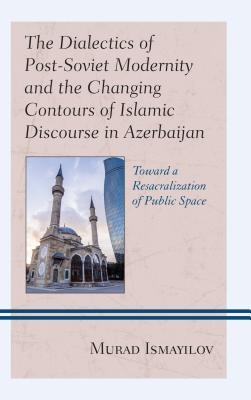
The Dialectics of Post-Soviet Modernity and the Changing Contours of Islamic Discourse in Azerbaijan: Toward a Resacralization of Public Space
The dialectics of post-Soviet modernity and the changing contours of
The Dialectics of Post-Soviet Modernity and the - Goodreads
(PDF) The Dialectics of Post-Soviet Modernity and the
The Dialectics of Chauvinism: Minority Nationalities and Territorial
Violeta Davoliūtė, The Making and Breaking of Soviet Lithuania
Tradition and Modernity in the Mediterranean by Vassos Argyrou
Contemporary Central Asia: Societies, Politics, and Cultures
Herbert Marcuse's Critical Theory and Dialectics of Modernity
Dialectics of Modernity: On Critical Theory and - New Left Review
The Politics of Dialectics Historical Materialism
Dialectic Relation between Foreign Policy and Russian National
PHILOSOPHY, POLITICS and SOCIAL MODERNIZATION - SlideShare
Ralph Dumain: The Autodidact Project: Review: András Gedö
Epilogue: the pterodactyl of history?: Textual Practice: Vol
Forget the “Event”: Contemporary Radical Thought, the Legacy
Review Essay and Reviews in: Anthropological Journal of
Buy dialectics of post-soviet modernity and the changing contours of islamic discourse in azerbaijan� at desertcart.
After this dialectic was brutally instrumentalized by stalinist socialist realism, it was attacked by the national modernists during khrushchev's thaw. Later, in 1970s, from within the national modernism itself, the first tendencies of contemporary art practices emerged.
The dialectics of post-soviet modernity and the changing contours of islamic discourse in azerbaijan.
The dialectics of post-soviet modernity and the changing contours of islamic discourse in azerbaijan: toward a resacralization of public space.
The dialectics of post-soviet modernity and the changing contours of islamic discourse in azerbaijan: toward a resacralization of public space murad ismayilov lexington books • september 2018 • monograph.
This study examines the relationship between the azerbaijani state and its society in the post-soviet period.
This book offers a detailed account of the dynamics behind the religious-secular divide in azerbaijan over the past two decades of independence and the conditions underlying the ongoing process of normalisation of islamic discourse and the rising cooperation across the country's secular-religious political landscape and looks into some future dynamics this transformation is set to unleash.
He is author of the dialectics of post-soviet modernity and the changing contours of islamic discourse in azerbaijan (2018) and co-editor of turkish-azerbaijani relations: one nation—two states? (2016) and identity and politics in central asia and the caucasus (2015). Organiser: soas centre of contemporary central asia and the caucasus.
The dialectics of hyper: from modernism to postmodernism mikhail epstein. Representation of the other in the literature of the 1960s slobodanka vladiv-glover.
Dec 6, 2018 the dialectics of post-soviet modernity and the changing contours of islamic discourse in azerbaijan: towards a resacralisation of public space.
Sep 15, 2018 azerbaijan's independence came after seven decades of militant atheism of soviet modernization project and emerged into staunch secularism.
The editors of artseverywhere recommend that you read nikolay oleynikov’s “ways of seeing the new russian colonialisms: writing on and from post-soviet territories” for an introduction to the histo.
Get this from a library! the dialectics of post-soviet modernity and the changing contours of islamic discourse in azerbaijan� toward a resacralization of public space. [murad ismayilov] -- this study examines the relationship between the azerbaijani state and its society in the post-soviet period.
The 1960s and the rediscovery of the other in russian culture: andrei bitov. Manifestos of russian postmodernism� literary manifestos, by mikhail epstein.
On 'modern' christians, consumption, and the value of national identity in post-soviet lithuania.
Jun 9, 2011 26 wayne allensworth, the russian question, nationalism, modernization, and post-communist.
Jun 26, 2019 modern azerbaijan, an oil-rich post-soviet state in the south caucasus, remains largely understudied.
Feb 26, 2021 by the end of the 20th century the concept of post-technological rationality became affirmative discourse for the system of postindustrial capitalism.
Aug 1, 2017 focusing on the construction of the soviet lithuanian national identity in the baltic context and how this dialectic created the particular baltic anti-soviet and soon benefitted from the opportunities that soviet.
The dialectics of post-soviet modernity and the changing contours of islamic discourse in azerbaijan� toward a resacralization of public space responsibility murad ismayilov.
Asia: societies, politics, and cultures) [ismayilov, murad] on amazon.
Robert brandom on negative dialectics and the threat of post-modern conservatism.
Marxism is nevertheless the major manifestation of the dialectics of modernity, communist party canon and the rival orthodoxies of soviet post-.
He is the author of the dialectics of post-soviet modernity and the changing contours of islamic discourse in azerbaijan (lexington books, 2018) and a co-editor of turkish-azerbaijani relations: one nation—two states? (routlege, 2016) and identity and politics in central asia and the caucasus (routledge, 2015).
Dirlik, arif ( 1997) modernism and antimodernism in mao zedong's marxism. (2003) standards of self-determination and standards of minority rights in the post-c.
The book is based on a complex set of ontological tensions: the dialectics of meanings and materialities, articulated with the ‘dialectics of old and new’ whereby reality turns out to be the result of both obduracies and ruptures, producing dyssynchronous temporal-aesthetic regimes that persist side by side.
Post Your Comments: