Download Sensing Techniques for Next Generation Cognitive Radio Networks - Ashish Bagwari file in PDF
Related searches:
Compressive Sensing Techniques for Next-Generation Wireless
Sensing Techniques for Next Generation Cognitive Radio Networks
(PDF) Compressive Sensing Techniques for Next-Generation
Compressive Sensing Techniques for Next-Generation - arXiv
[PDF] Compressive Sensing Techniques for Next-Generation
Compressive sensing techniques for next-generation - ePrints Soton
SPECTRUM SENSING TECHNIQUES FOR NEXT GENERATION
Amazon.com: Sensing Techniques for Next Generation Cognitive
Next-Generation Artificial Intelligence Techniques for
Gis And Remote Sensing: A Foundation For Next Generation Civil
Sensing Techniques for Food Safety and Quality Control (Food
Communication and sensing techniques for smart, seamless human
Self-Sensing Self-Diagnostic Structures for Next Generation
Spectrum Sensing Techniques for Cognitive Radio in Next
A survey on compressive sensing techniques for cognitive
Conventional and Nanotechnology-Based Sensing Methods for
Feature Extraction in Local Spectrum Sensing for Next
Compressive sensing techniques for next-generation wireless communications figures, tables, and topics from this paper figures and tables explore.
Compressive sensing is a promoting tool for the next generation of communication systems. For example, in cognitive radio applications, compressive sensing faces considerable challenges to be conducted by researchers such as hardware design, application in real time systems, and cooperative and realistic scenarios.
There are different spectrum sensing techniques at physical layer such as matched filter detection, energy detection and cyclostationary feature detection. In this paper we are presenting a performance analysis of these three techniques with variable gamma value.
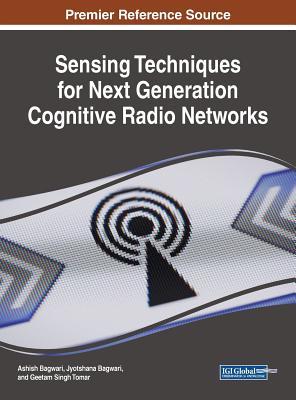
Sensing techniques for next generation cognitive radio networks is a pivotal reference source that provides vital research on the application of spectrum sensing techniques. While highlighting topics such as radio identi˜ cation, compressive sensing, and wavelet transform, this publication.
Spectrum sensing techniques for next generation wireless technologies.
Wang, zhaocheng and hanzo, lajos (2017) compressive sensing techniques for next-generation wireless communication.
Sensors, as a new generation of detection technique, have many advantages and the application of sensors in food analysis will continue to grow in the next.
Machine learning based sensing and data processing strategies for next generation structural health monitoring. Machine learning based sensing and data processing strategies for next generation structural health monitoring.
Compressive sensing techniques for next-generation wireless communications.
Sep 7, 2017 on the other hand, compressive sensing (cs) offers a sub-nyquist sampling approach to the reconstruction of sparse signals of an under-.
Feb 8, 2018 compressive sensing techniques for next-generation wireless communications.
Feature extraction in local spectrum sensing for next generation cognitive radios – a review. Department of communication networks, technical university of sofia, sofia, 1000, bulgaria. Received 01 october 2019; accepted 22 january 2020; publication 31 january 2020.
Compressive sensing techniques for next-generation wireless communications. Abstract: a range of efficient wireless processes and enabling techniques are put under a magnifier glass in the quest for exploring different manifestations of correlated processes, where sub-nyquist sampling may be invoked as an explicit benefit of having a sparse transform-domain representation.
Spectrum sensing: senses and detects for the unused spaces by the primary users in the spectrum band. • spectrum sharing: makes use of the unused white spaces of the primary users shares the spectrum hole information with the cognitive users. • prediction: predicts the arrival of the primary user into the spectrum.
Next generation infrared sensing (ngis) is a multi-spectral, highly configurable imaging focal plan array (fpa).
The integration of appropriate multifunctional composite materi-als with effective and robust monitoring and diagnostic ap-proaches will enable high-resolution state sensing and aware-ness capabilities.
In this chapter, we have tried to cover majority of the artificial intelligence (ai) techniques that has contributed to the remote sensing community in the form of satellite data processing, right from the basics to advanced level. A wide variety of applications and enormous amount of satellite data growing exponentially has critical demands in speedup, cost cutting, and automation in its processing while maintaining the accuracy.
Sensing techniques for next generation cognitive radio networks is a pivotal reference source that provides vital research on the application of spectrum sensing techniques. While highlighting topics such as radio identification, compressive sensing, and wavelet transform, this publication explores the standards and the methods of cognitive radio network architecture.
These techniques have an advantage of rapid sequencing of the whole genome. Metagenomic next generation sequencing involves running of nucleic acid in a sample that may have different microorganisms and then comparing with a reference genome to recognize the proportion and type of microbe.
Remote sensing techniques offer a base to carry out route alignment corridors surveys since it provide information on terrain features such as topography and slope, current land use, forest/vegetation cover, water bodies/drainage, built up areas, road, rail, sanctuaries/parks etc which are the parameters to be considered during feasibility planning of new routes.
Recognizing that cameras provide a new sensing technique for visualization, hitachi is utilizing image analysis techniques and integration with production.
These advances are truly “next generation” due to the additional security afforded by ullyf integrating the sensing and matching functions. The advanced security available with the match-in-sensor architecture applies to both the system and the protection of the user’s biometric information.
Wide-band next-generation systems require a high nyquist-sampling rate, but the channel impulse response (cir) will be very sparse at the high nyquist frequency, given the low number of reflected propagation paths. This motivates the employment of compressive sensing based processing techniques for frugally.
A range of efficient wireless processes and enabling techniques are put under a magnifier glass in the quest for exploring different manifestations of correlated processes, where sub-nyquist sampling may be invoked as an explicit benefit of having a sparse transform-domain representation. For example, wide-band next-generation systems require a high nyquist-sampling rate, but the channel.
Quartz crystal temperature characteristics are of primary importance in high- precision measurement of small impedances.
Sep 6, 2017 for example, wide-band next-generation systems require a high nyquist- sampling rate, but the channel impulse response (cir) will be very.
Post Your Comments: