Read Online The Political Economy of Agricultural and Food Policies - Johan Swinnen | ePub
Related searches:
(PDF) The Political Economy of Agricultural and Food Policies
The Political Economy of Agricultural and Food Policies Johan
The Political Economy of Agricultural and Food Policies - JSTOR
The political economy of food, agriculture and irrigation
The political economy of agricultural and food policies IFPRI
The Political Economy of Agricultural Trade and Policy
Farm bills: First principles and the political economy of
The Political Economy of Agricultural and Rural - Upjohn Research
Political Economy of Agriculture and Food 15PECC049 SOAS
The Political Economy Of Agricultural Trade And Policy: Toward A
Intensification, Political Economy, and the Farming Community; In
Political economy models and agricultural policy formation
The Political Economy of Agricultural and Food Policies (2018)
The international political economy of agriculture and food
The political economy of COVID-19: Impacts on agriculture and food
Agriculture and economic development tutor2u
Nature and Scope of Agricultural Economics – FAWE E-Learning
Political Economy: International, Local and Definition - Video
The Big Picture - State of Agriculture and Rural Economy - Insights
The Political Economy of Agricultural Growth and Rural
The Political Economy of Agricultural and Rural Development
Working Paper 57: Agricultural commercialisation and the
Political economy west african agriculture Social and
Changing coalitions in value chains and the political economy
Principle, at least, the emphasis in political economy upon the structure, or pol-. Itical matrix, of an economy enables us to analyze economic organization as systems. * prepared for presentation to the vi national congress of colombian.
The purpose of this study has been to investigate some prominent determinants of agricultural protection across industrialized and developing countries. The hypotheses tested are that consumers' food security concerns and producers' pressure group characteristics play an eminent role in the determination of political market equilibrium in the agricultural sector.
This paper uses new data on agricultural policy interventions to examine the political economy of agricultural trade policies in sub-saharan africa.
This book offers an in-depth analysis of the political economy of soybean production in brazil, argentina and paraguay, by identifying the dominant.
This dissertation is a case study, which examines the state of agricultural development in nigeria. The study is intended to be a mirror for a wider undertanding of the state of agriculture sub-saharan african (ssa). Pitching its tent in a typical rural nigerian agrarian community, and applying the political economy ideological framework, the study examines factors that impact and shape agricultural production in the country.
In particular, political variables such as federalism, the type of constituency, party fragmentation, and elections all exert significant effects on agricultural producer support. This type of political economy analysis moves us much closer to the integration of the study of agricultural and industrial trade protectionism.
Since electricity supply is considered to be among the most critical conditions for economic activities, the inquiry in this study would shed light on the political economy aspects of economic development. Low agricultural electricity tariffs may have adversely affected industrialization in at least two ways.
After decades of research, the political economy of agricultural policy making in africa still seems to puzzle academics and practitioners alike. This paper discusses the evolution of the specific political economy in agricultural policy reforms from a historic perspective, and why political economy issues are (still) key problems in rural development.
28 feb 2018 the political economy of aoi indicates that the countries which have more than 1 will spend more budget in budget allocation towards agriculture.
West africa's agriculture has, for 150 years, been heavily geared toward export, yet the region is one of the world's poorest. Keith hart examines this question, focusing particularly on how this situation has affected the indigenous peoples of west africa.
This paper argues that this is partly due to the fact that the legacy of political economy of agricultural policy reforms in africa was inadequately considered. After decades of research, the political economy of agricultural policy making in africa still seems to puzzle academics and practitioners alike.
99 (c) part of cambridge studies in social and cultural anthropology.
This book offers an in-depth analysis of the political economy of soybean production in brazil, argentina and paraguay, by identifying the dominant private and public actors and control mechanisms that have given rise to a corporate-driven, vertically integrated system of regionalized agricultural production in the southern cone of south america.
This paper examines the political economy of the agricultural policy processes in malawi through the lenses of the fertilizer subsidy programme that has raised.
Political economy of public policies: insights from distortions to agricultural and food markets by kym anderson, gordon rausser and johan swinnen.
In this article, i focus on the findings from this study on the political economy of agricultural policy as they inform questions about the political economy of agricultural pricing, primarily but not exclusively in developing countries. To do so, first i provide some background data on the comparative study. I sketch the various stylized facts that were believed at the time, and contrast them.
Working paper 57: agricultural commercialisation and the political economy of value chains: tanzania rice case study. Posted on march 31, 2021 by fac ice team - publications, working papers. This paper presents the political economy of rice commercialisation in tanzania.
Winner of the european association of agricultural economists book award food and agriculture have been subject to heavy-handed government interventions.
Although economic and political considerations are present to some degree in the motivation for giving food, today it is mainly given as part of a development regime that aims primarily to promote food security and rural development rather than as a means to serve the domestic eco nomic and political interests of donor countries.
Soas p/g course description, political economy, agrarian change, development. Main theories of agrarian change and the role of agriculture in development.
The political economy of aoi indicates that the countries which have more than 1 will spend more budget in budget allocation towards agriculture. The study found that, clearly agriculture globally is not on the priority list for the local central governments in allocating their budgets towards agriculture.
However, agriculture forms but a small portion of the gdp and farming a miniscule portion of the labor force, then governments tend to adopt policies that favor the fortunes of farmers. Given that political power tends to derive from income and numbers, the relationship between the level of development and the nature of government policy.
Land grab as development strategy? the political economy of agricultural investment in ethiopia.
The political economy of agricultural policy processes in africa.
21 jan 2018 political economy is the study of how economic forces relate to laws and the political environment, both national and global.
22 oct 2020 the political economy of covid-19: impacts on agriculture and food policies.
5 jan 2016 summary: while the government is hopeful of the country being on the road to witness 4% agricultural growth, the challenges are manifold.
3 may 2019 concurrently, usaid's bureau for food security has also adopted a systems approach to sustaining investments in agriculture markets.
Political economy of agricultural policy in africa (peapa) debates on the appropriate role for the state in stimulating agricultural development should be linked to an assessment of the capacity and willingness of the state to implement particular policies in particular country contexts. The political economy of agricultural policy in africa (peapa) project proceeds from the following insights:.
16 jun 2017 now, the wave of unrest among farmers in multiple parts of india reminds us that the problems of indian agriculture are more pervasive than just.
This study explores the relevance and applicability of political economy models for the explanation of agricultural policies.
Most of the nation's farmers were involved in increases in agricultural productivity associated with the use of improved crop varieties, fertilizers and other types of working capital but remarkably little investment in farm machinery or other types of long-term capital investment.
For many lower and middle-income countries, the farm sector remains a significant contributor to exports, employment and economic growth.
• the political economy of agricultural policy processes • land acquisitions and principles of responsible investment • changing patterns of agricultural growth and investment • pathways to improved irrigation performance • china and brazil in africa and new paradigms of agricultural development.
This paper gives an overview of the recent developments in the field of the political economy and its applications to agricultural.
The following sections are included: preface introduction (kym anderson and yujiro hayami) economic growth, structural change and the political economy of protection (kym anderson) the growth of agricultural protection (kym anderson, yujiro hayami, and masayoshi honma) the roots of agricultural protectionism (yujiro hayami) the determinants of agricultural protection levels: an econometric analysis (masayoshi honma and yujiro hayami) the price, trade and welfare effects of agricultural.
Drawing on recent developments in political economy theories and in the generation of empirical measures of the extent of price distortions, the present volume provides both analytical narratives of the historical origins of agricultural protectionism in various parts of the world and a set of political econometric analyses aimed at explaining the patterns of distortions that have emerged over the past five decades.
This book tackles the central question of the political and structural changes and characteristics that govern agriculture and food. Original contributions explore this highly globalized economic sector by analyzing salient geographical regions and substantive topics. Along with chapters that investigate agri-food in north america, europe, latin america, asia and oceania, the book includes contributions that cover topics such as labor, science and technology, the financialization of agri.
This paper examines the political economy of agricultural commercialisation in malawi over the past three or so decades both in a contemporary and historical perspective. Document agricultural input subsidies for improving productivity, farm income, consumer welfare and wider growth in low- and lower-middle-income countries: a systematic review.
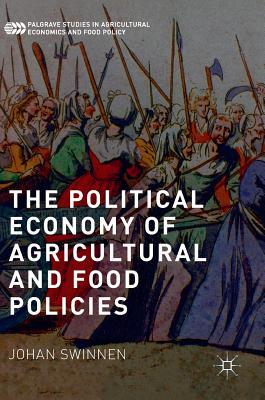
Food and agriculture have been subject to heavy-handed government interventions throughout much of history and across the globe, both in developing and developed countries. 1 political considerations are crucial to understand these policies since almost all agricultural and food policies have redistributive effects and are therefore subject to lobbying and pressure from interest groups and used by decision-makers to influence society for both economic and political reasons.
While the economic impact of the agricultural agreement may be a matter of some dispute, the fact that agriculture was finally included as one of the negotiating.
Yet, emerging evidence of agricultural commercialisation pathways shows complex and differentiated deepening and stagnations across settlement models. Normative– political constructions of ‘good’, ‘modern’ and ‘progressive’, as advocated by large-scale farmers and some bureaucrats, are countered by proponents for redistribution, mainly the landless rural peasants, keen on social and economic justice as well as democratic land ownership.
The political economy of agricultural transition, purposes to present a diverse set of arguments to demonstrate why china and the soviet union, along with other countries in europe and asia, chose different reform policies in their dramatic transition from communism to market economies.
Agricultural economics is an applied field of economics concerned with the application of economic theory in optimizing the production and distribution of food and fiber. Agricultural economics began as a branch of economics that specifically dealt with land usage, it focused on maximizing the crop yield while maintaining a good soil ecosystem. Throughout the 20th century the discipline expanded and the current scope of the discipline is much broader.
The scope of agricultural production economics includes production, distribution, consumption and government activities in relation to agriculture and farm.
The past decades have witnessed significant changes in the global political and market environments that have affected agricultural and food sectors in many countries. The european union has reformed its common agricultural policy several times, thus changing the rules of the game for the eu member states and also affecting world markets.
This book seeks to understand the simultaneous economic and political contributors to china's changing agricultural protection levels and the central.
Provides an in-depth analysis of the fastest growing agricultural markets and the unique crop that is fueling their growth – soybeans. This book offers an in-depth analysis of the political economy of soybean production in brazil, argentina and paraguay, by identifying the dominant private and public actors and control mechanisms that have given rise to a corporate-driven, vertically integrated system of regionalized agricultural production in the southern cone of south america.
A political economy model demonstrates that agriculture should not be treated as the exception to our understanding of protectionism as is often the conclusion of previous econometric studies. The results of several cross-sectional time-series analyses suggest that agricultural producer support conforms to general patterns of protectionism in other areas of industry.
26 aug 2016 abstract the role of agriculture in economic development and the development politics of promoting smallholder versus large‐scale agriculture.
The expansion of capitalist agriculture is a multilevel process that includes the reorganization of local, regional, national, and international systems of production, distribution, and consumption in order to facilitate the process of capital accumulation both at the local and global level.
The political economy of food, agriculture and irrigation development in east and southern africa.
Intensification, political economy, and the farming community; defense of a bottom-up perspective of the past.
Food and agriculture have been subject to heavy-handed government interventions throughout much of history and across the globe, both in developing and in developed countries. Today, more than half a trillion us dollars are spent by some governments to support farmers, while other governments impose regulations and taxes that hurt farmers.
The agricultural policy research in africa (apra) programme of the future agricultures consortium has recently produced a series of papers on the political economy of agricultural commercialisation.
Post Your Comments: