Full Download Constantine: Religious Faith and Imperial Policy - A. Edward Siecienski file in ePub
Related searches:
Constantine: Religious Faith and Imperial Policy - 1st Edition - A. Ed
Constantine the Great and Christianity - Wikipedia
Constantine: Religious Faith and Imperial Policy – Bryn Mawr
Patristic and Historical Evidence for Constantine's Christianity - JSTOR
CONSTANTINE THE GREAT (A.D. 312-37) AND CHRISTIANITY IN
Constantine: Religious Faith and Imperial Policy Taylor
The Interaction of Politics and Religion in Ancient Rome
CONSTANTINE AND CHRISTIANITY - African Journals Online
Constantine I: Contributions to Christianity and Other
Constantine Religious Faith and Imperial Policy (2017
Emperor Constantine and the Theology of Christianity – 1
The Eastern Roman Empire, Constantine the Great, and
Constantine and the Christian Faith: My Fourth Smithsonian Lecture
Roman Culture/Constantine and early Christianity - Wikibooks, open
Christianity and the Roman Empire Within a few hundred years, the
Amazon.com: Constantine: Dynasty, Religion and Power in the
Constantine: Dynasty, Religion and Power in the Later Roman
Constantine the Great and Christianity Wiki, Biography
Constantine And Christianity The American Conservative
The Church and the State After Constantine
How Constantine Saved Rome And Christianity In The Empire Cram
Religion and other beliefs - A Closer Look at Gladiators
Byzantine Religion and Influence - Doctor
Emperor Constantine and Faith Constantine Christian faith
Before and After Constantine the Great
Paganism and Catholicism Catholic Church Practices
CONSTANTINE, CHRISTIANITY, AND THE BATTLE OF THE MILVIAN
Constantine was the first emperor to stop christian persecutions and to legalize christianity, as well as all other religions and cults in the roman empire. In february 313, constantine met with licinius in milan, where they developed the edict of milan. The edict stated that christians should be allowed to follow the faith without oppression.
Constantine i was a roman emperor who ruled early in the 4th century. He was the first christian emperor and saw the empire begin to become a christian state.
You could argue, in fact, that constantine’s adoption of christianity as a state religion was an original sin from which christianity has still not recovered.
Jan 29, 2021 constantine the great made rome christian, but the sincerity of his belief is often questioned.
It is very difficult to actually find any convincing and reliable account of the true religious affiliations, feelings and beliefs of constantine.
Constantine made christianity the main religion of rome, and created constantinople, which became the most powerful city in the world. 280– 337) reigned over a major transition in the roman empire—and much more.
The christian writers (eusebius and lactantius) of the day believed constantine was a genuine christian, pagan writers attacked him for neglecting pagan worship and we have several of his letters that clearly speak and sound like a person of genuine faith.
Constantine's policies and legislation were not explicitly christian and he did not make it the official religion.
Constantine and licinius granted freedom of worship to all, including christians. Constantine protected christianity, believing that the religion could unify his empire. * constantine was thus appalled to find that the churches were divided by disputes. Eager for consensus, he sought to establish, and then enforce, “correct” doctrine.
But was constantine genuinely a committed christian, or was he using religion for his own ends? ever since the historian jacob burckhardt first suggested it in the 1850s, many have considered that the emperor’s conversion might have been motivated by cynical opportunism and ambition for total power, rather than by genuine spiritual belief.
Constantine obeyed his vision and removed the normal roman standard from all weapons, shields and standards and replaced it with the cross. After winning victory constantine gave credit to the christian god and is said to have converted to the faith.
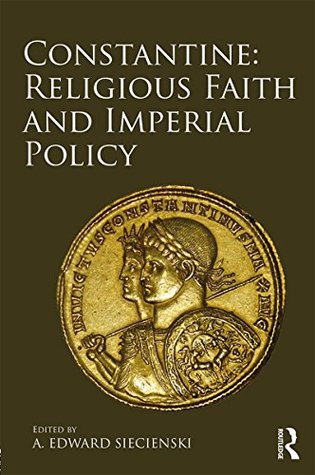
Constantine: religious faith and imperial policy brings together some of the english-speaking world’s leading constantinian scholars for an interdisciplinary study of the life and legacy of the first christian emperor. For many, he remains a sign of contradiction (luke 2:34) whose life and legacy generate intense debate.
Constantine was influential in christian history for his personal faith, religious politics, issuing the edict of milan, and calling the council of nicea. Constantine was the son of a roman official and his christian concubine.
Destruction of paganism in the roman empire from constantine to justinianthe final pagan.
Constantine, still in his twenties, was a successful commander, and had established a devout loyalty from his soldiers. He had adopted a generally open-minded view on freedom of religion in the empire from his father. Constantine was intelligent, learned, devious politically, and above all, ambitious.
The interaction of politics and religion in ancient rome by chariotjournal, october 19, 2020 by hannah magee. Constantine, unlike many of his predecessors, was successfully able to introduce an integrated and dynamic relationship between religion and state law which had profound consequences.
Constantine‟s conversion, church/state relations, government.
While many people tend to exaggerate the growth of christianity before the 4th century, ninety percent of the empire was not christian, and there is no evidence.
Constantine made christianity the official roman religion solely for political gain. Christianity is a hybrid religion, the result of constantine's fusing the pagan cult of sol invictus with christianity. This blending can be seen in constantine's changing the christian day of worship from saturday to sunday.
Why the enslaved adopted the religion of their masters—and transformed it my journey from a religion of self-salvation to a faith that takes sin seriously.
Constantine recognized the political value of small but growing christian minority, declaring himself pontifex maximus of both the christian faith and of the roman gods. This historical decision allowed him to claim authority over not just a majority, but of all romans, pagan and christian alike.
Oct 1, 2020 constantine's adoption of christianity marked the transformation of christianity from an obscure sect to a dominant religion.
Apr 16, 2018 preview [authors and titles are listed at the end of the review. ] from 312 to 325, constantine's reign produced a flurry of important dates, long.
When constantine married paganism and christianity, the door was opened for false doctrines to creep into the early christian church, and they were gradually introduced into the system. The church became divided into the catholic church who accepted the pagan doctrines, and the true christian church who resisted constantine’s indoctrination.
Figures of the old gods were replaced or assimilated into christian symbolism. Constantine himself was baptized into the christian faith right before his death. 4 constantine gained political power the way most ancients did, through warfare and murder.
T hirty years on from constantine and eusebius (harvard university press, 1981, followed the next year by the new empire of diocletian and constantine), and after a stream of constantinian notes and articles which have appeared from his pen in the intervening generation, timothy barnes’s latest volume brings us his ‘second thoughts’ on the first christian emperor.
Although christianity would not become the official religion of rome until later in the fourth century,.
The religious policies of constantine the great have been called ambiguous and elusive. 120 born in 273 during the crisis of the third century (ad 235–284), he was thirty at the time of the great persecution, saw his father become augustus of the west and then shortly die, spent his life in the military warring with much of his extended family, and converted to christianity sometime.
Constantine the great, christianity went from a persecuted faith to the most important religion in the roman empire.
The text tells the story of emperor constantine’s conversion, and a little of how his new faith was reflected in his imperial policy. In addition to what you’ll read below, he outlawed infanticide, the abuse of slaves and peasants, and crucifixion, and he made sunday a day of rest.
A few years before his death in 313, constantine had already declared that christianity was to be the new state religion.
The emperor constantine the great, said he had had a sign from the god of the christians in a dream in the night before he had an important battle. The emperor won this battle and showed his gratitude to the christian god by turning the entire empire to this new religion.
His religious policies, formed from these experiences, comprised increasing toleration of christianity, limited regulations against roman polytheism with toleration, participation in resolving religious disputes such as schism with the donatists, and the calling of councils including the council of nicaea concerning arianism.
Power: constantine, emperor, according to heathen ideas one who stands at the height of human grandeur (he was counted among the gods), accepts christianity, furnishes an example to the whole nation, converts the nation, and extends a helping hand as against heretics, and through the ecumenical council fixes the unitary orthodox christian faith.
The accession of constantine was a turning point for early christianity; after his victory, constantine took over the role of patron of the christian faith.
—constantine can rightfully claim the title of great, for he turned the history of the world into a new course and made christianity,.
Constantine's chief concern was that a divided church would offend the christian god and so bring divine vengeance upon the roman empire and constantine.
What religion he had, many argue, was at best a blend of paganism and christianity for purely political purposes.
Their piety represented a religious faith that was more meaningful than the theological debates of the aristocrats and bureaucrats in constantinople. The monks often provided social services to the communities near them; often providing spiritual counsel and organizing relief efforts by providing food and medical attention in case of disasters.
With the conversion of constantine, however, it becomes an imperial religion. Now, jesus had been transformed into the lord christ of heaven and constantine, the emperor, ruled in his name.
Constantine stood out because he became a christian and unabashedly made jesus the patron of his army. By 313, just two contenders remained, constantine and licinius. The two jointly issued the edict of milan, which made christianity a legal religion and officially ended the persecution.
As for barnes writing, i will simply say i found the chapters on constantine's rise to be compelling reading. The two works taken together, constantine and eusebius (1981) and constantine: dynasty, religion and power in the later roman empire (2013) provide a great narrative for this period of the roman empire.
Constantine the great, christianity went from a persecuted faith to the most important religion in the roman empire. Constantine’s support for christianity was slow in its development, and far from a predictable occurrence. Constantine came to power when a series of civil wars at the beginning of the fourth.
Actually essentially, under constantine, the concept of the catholic or universal, (catholic meaning universal) religion, the official roman religion, as that which was a composite of various religious writings which were brought together to form that which is known as the christian religion.
Contrary to popular belief, however, constantine did not make christianity the official religion of the empire. Constantine's program was one of toleration only, and he continued to support both christianity and paganism.
In 306, when constantine was first elevated by his father’s troops, the imperial government was in the middle of a concerted effort to remove all traces of christian presence from the empire. When he died in 337, christian leaders had assumed the rank, dress, and, increasingly, the duties of the old civic elite.
Constantine: religious faith and imperial policy brings together some of the english-speaking world's leading constantinian scholars for an interdisciplinary study of the life and legacy of the first christian emperor.
Constantine i - constantine i - commitment to christianity: shortly after the defeat of maxentius, constantine met licinius at mediolanum (modern milan) to confirm a number of political and dynastic arrangements. A product of this meeting has become known as the edict of milan, which extended toleration to the christians and restored any personal and corporate property that had been.
So, either from pure religious feelings or from ambition, constantine helped christianity to be recognized as a legal and strong religion within the roman empire.
Constantine was a sincere christian, a truly great christian emperor and a genuine apostle of the christian church.
If you are interested in learning more about constantine i would highly recommend the text by charles odahl (to the right) to better decide if constantine was a christian or just a political opportunist. My articles will be edited using odahl's excellent research: emperor constantine comes to power emperor constantine and christian faith.
Any reputation constantine has about being “good” and/or “christian” comes from church father eusebius.
Constantine himself was baptized into the christian faith right before his death. 4 his final battle was permeated with religious language; constantine.
Constantine may not have been a christian until his deathbed baptism. Most people consider constantine a christian from the milvian bridge in 312, but he wasn't baptized until a quarter century later.
Recently, scholars have rightly dismissed this question as obsolete, instead asking 'what kind of christian was constantine?' and 'how did this religious system.
This religion created by constantine was nothing new, it was the exact same religious system dating back to babylon and the same religion constantine worshipped before and until his death sun worship. Constantine was a follower of christos mithra whose followers were known as christians.
28, 312, roman emperor constantine defeats maxentius at milvian bridge to take control of the roman empire. According to early christian author lactantius, before the battle “constantine.
Constantine i, byname constantine the great, latin in full flavius valerius constantinus, (born february 27, after 280 ce� naissus, moesia [now niš, serbia]—died may 22, 337, ancyrona, near nicomedia, bithynia [now izmit, turkey]), first roman emperor to profess christianity.
Video created by yale university for the course a journey through western christianity: from persecuted faith to global religion (200 - 1650)�.
Constantine was the first roman emperor to convert to christianity. The book explores the emperor's image as conveyed through literature, art, and architecture,.
The accession of constantine was a turning point for early christianity. After his victory, constantine took over the role of patron of the christian faith.
Grab, constantine's conversion and his legalization of christianity with his edict of milan led to several roman aristocrats adopting the faith, and the religion.
He knew nothing of religion without politics or politics without religion.
God, books i–viiagainst the galilaeansconstantine: religious faith and imperial policy. Traces the early history of the christian church from jewish palestine.
Many more modern historians have said in a lot of ways the conversion of constantine was disastrous, or at least very difficult for the church, because from this moment on in all of western history the life of the church and the life of the state are intertwined.
Contrary to popular belief, constantine did not rescue christianity from extinction. Even if he had not adopted the christian cause, the majority of the roman.
Constantine ruled the roman empire as sole emperor for much of his reign. Some scholars allege that his main objective was to gain unanimous approval and submission to his authority from all classes, and therefore chose christianity to conduct his political propaganda, believing that it was the most appropriate religion that could fit with the imperial cult (see also sol invictus).
May 18, 2020 this is the beginning of constantine's religious conversion. Formal instruction in the new faith; and public confession of faith and baptism.
Constantine’s mother, helena, was a devout christian, and it could have been easy for constantine to just go along with the faith for political reasons because of his mother’s devotion. When faith is a centerpiece to a parent’s life, any child feels a strong compulsion to go along.
Post Your Comments: